World Humanitarian Day: Meaning, History and How to Take Action
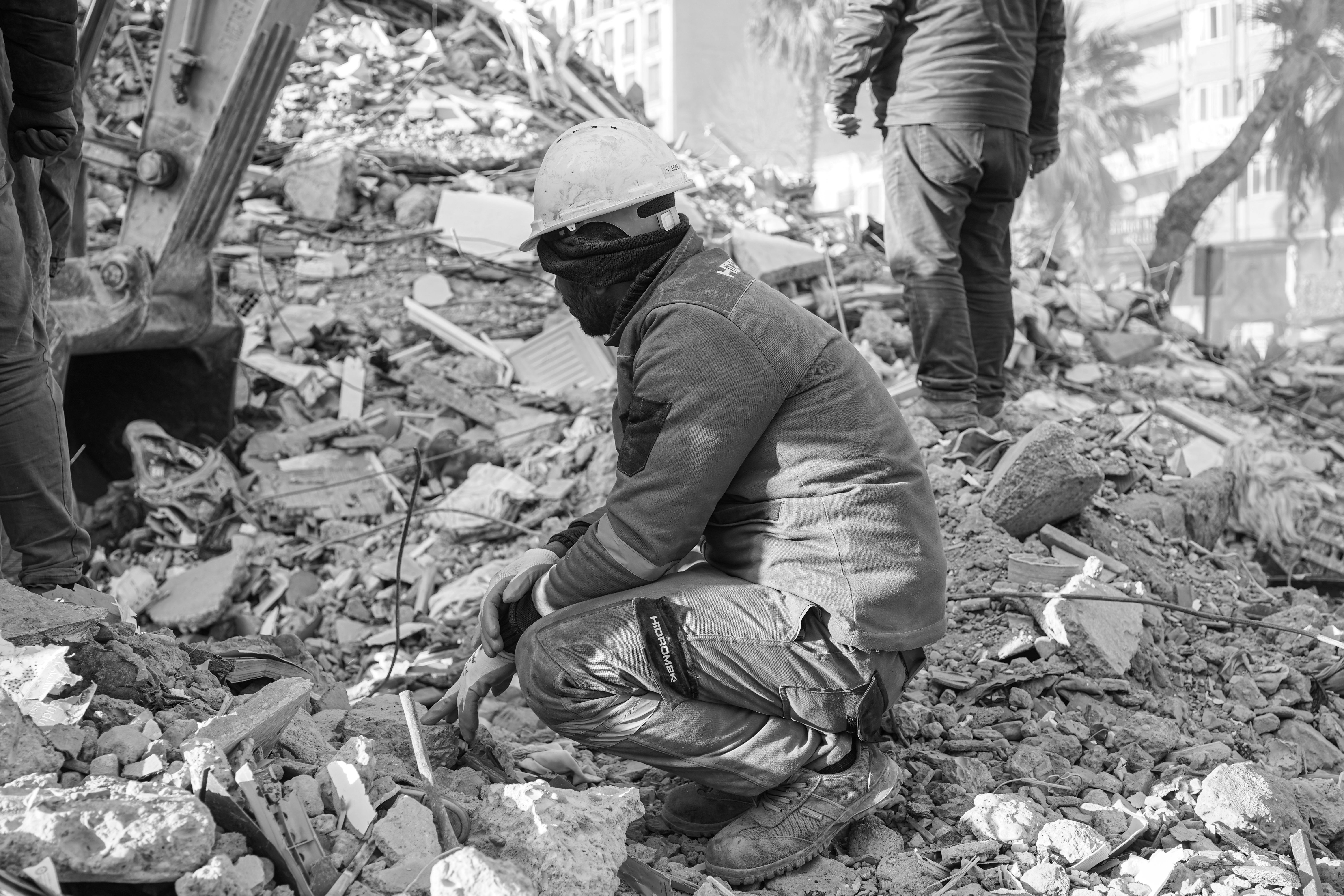
Rescue workers amidst rubble after an earthquake in Turkiye. Photograph by Baset Alhasan.
World Humanitarian Day is observed every year on August 19th, and the UN's message for 2026 is direct: “The time for concern is over. The time for consequence is now”. The day honours the humanitarian workers who have lost their lives helping people in crisis, and the millions still doing that work today.
What is World Humanitarian Day?
World Humanitarian Day is the international day established by the United Nations to honour humanitarian workers: the doctors, nurses, midwives, counselors, drivers, translators, engineers, and coordinators who deliver food, medicine, shelter, and emergency assistance to communities in crisis. These people aren't always international staff flown in from abroad. Many of them are local and national workers responding to crises unfolding in their own countries, often at the greatest personal risk.
The day honours those who have died doing this work, and asks the rest of the world to keep those still doing it safe. World Humanitarian Day recognises humanitarian workers wherever they are needed: the medics working under bombardment in Gaza, the volunteers running community kitchens in Sudan, the emergency responders pulling survivors from earthquake rubble, the health workers containing a disease outbreak, and countless more like them all over the world.
The story behind August 19th and the origins of World Humanitarian Day
On the afternoon of August 19th, 2003, a truck bomb was driven into the wall of the Canal Hotel in Baghdad, which was serving as the headquarters of the United Nations mission in Iraq. The blast destroyed a large section of the building, killing 22 people and leaving more than a hundred injured. Among the dead was Sérgio Vieira de Mello, a Brazilian diplomat who was leading the UN mission in Iraq at the time, and who had spent his career doing humanitarian and peacekeeping work in some of the most complex emergencies around the world. These included Cyprus in the 70s, Lebanon in the 80s, Cambodia in the 90s, and almost a dozen others before he was killed in Iraq in 2003.
Five years later, in December 2008, the United Nations General Assembly designated August 19th as World Humanitarian Day. The intention was to broaden the meaning of the date from the anniversary of the bombing to become a day for the world to honour every humanitarian worker killed in the service of others, and to reaffirm the principles meant to protect those still doing the work.
World Humanitarian Day 2026 theme: the time for concern is over
The United Nations message for World Humanitarian Day 2026 is a call to action: "The time for concern is over. The time for consequence is now."
It’s an important distinction, as governments and international institutions regularly express concern when humanitarian workers are killed or when aid is blocked from reaching the communities that need it. Even if statements are issued and condolences are offered, the same policies often continue with no further concrete action taken.
Consequence means something specific. It means fully funding humanitarian operations and sustaining that funding beyond the initial crisis headlines. It means protecting humanitarian access so that aid reaches the people it is meant for. It means credible, independent investigation when humanitarian workers are killed. It means accountability for those found responsible. It means restricting the transfer of arms where there is a clear risk they will be used to commit serious violations of international humanitarian law.
The UK offers a good example of concern without much consequence. On 1st April 2024, Israeli drone strikes killed seven aid workers from the charity World Central Kitchen in central Gaza, including three British nationals. They were delivering food in clearly marked vehicles whose route had been coordinated with the Israeli military. The UK government called the killings "appalling," but its response didn't materialise into a huge amount of concrete action. A month before the attack, the UK's own government lawyers had already advised that Israel was breaching international humanitarian law, which should have required an immediate suspension of arms sales.
Instead, a partial suspension came months later, but it didn’t include components for the F-35 fighter jets, despite the aircraft's confirmed use in strikes on densely populated areas of Gaza. By April 2026, the government's position had softened from "appalled" to "we repeat our call for accountability," but the underlying policies had not changed in any meaningful way.
This gap between what was said and what continued to happen is exactly what the UN's 2026 message is about.
The UN's 2026 message asks the world to stop treating statements of concern as the end of the process. Concern acknowledges that something is wrong, but consequence should be what follows, and for humanitarian workers still operating in the most dangerous places in the world, what follows is the only thing that really matters.
Why humanitarian workers need protection in 2026
The three years from 2023 to 2025 were the three deadliest on record for humanitarian workers. According to the Aid Worker Security Database, 297 were killed in 2023, 387 in 2024, and 350 in 2025. In 2024, the deadliest year, 181 of those killed were in Gaza and 60 in Sudan, with state actors identified as the most common perpetrators. Violence against aid workers also rose in Congo, Lebanon, South Sudan, and more than a dozen other countries.
The vast majority of those killed were national and local staff: people responding to crises in their own communities, often the last line of support for families who have nowhere else to turn. When these workers are killed, whole communities lose the people keeping them alive.
International humanitarian law exists to protect them. The core protections are straightforward: humanitarian and medical personnel must be respected and protected. Their marked vehicles and facilities are also protected under the law. Parties to a conflict must allow the safe passage of humanitarian aid to civilians who need it. Deliberately attacking protected humanitarian personnel can constitute a war crime under international law. When humanitarian workers are killed or attacked, international law requires credible, independent investigation and accountability.
On March 23rd 2025, Israeli forces attacked a clearly marked convoy of ambulances, a fire truck, and a UN vehicle in Rafah, southern Gaza. The workers, from the Palestine Red Crescent Society, Palestinian Civil Defence, and UNRWA, had been dispatched to rescue colleagues who had come under fire earlier that day. Fifteen were killed, and their bodies were found in a mass grave a week later near their destroyed, clearly marked vehicles. The UN Human Rights Office described it as an apparent case of deliberate targeting of medical and humanitarian personnel in violation of international law.
In South Sudan, five humanitarian workers were killed when their clearly marked convoy was ambushed in Jonglei State in June 2026. Thirty-six aid workers have been killed in South Sudan in 2026 alone.
The law already exists to prevent this. The consequence that the UN's 2026 message demands starts with enforcing it: credible investigations when humanitarian workers are killed, accountability for those responsible, and the political will to act on what those investigations find.
Five ways to mark World Humanitarian Day
World Humanitarian Day is a single day, but the actions it calls for are for the long term and to be held in our minds throughout the year. The five actions below range from a few minutes to a recurring commitment, and most of them cost nothing. Whether you have time to write to your elected officials, money to donate, or just a few minutes to learn something new, there is something you can do today.
Donate to a humanitarian appeal
Established organisations like Doctors Without Borders (MSF), the International Committee of the Red Cross (ICRC), Save the Children, UNICEF, and the IRC accept one-off and recurring donations directly through their websites, and every contribution helps sustain the work their teams are doing on the ground.
Beyond the larger organisations, locally led initiatives are also the ones keeping communities alive in the most dangerous places. In Sudan, the Emergency Response Rooms, a network of volunteer-run mutual aid groups, have been coordinating food, medical care, and evacuations since 2023. In Gaza, Ele Elna Elak is one of several volunteer-led initiatives that provide essential aid and tents to displaced families, as well as building desalination plants to bring safe, clean water to those in need.
Chuffed.org is a great place to find verified fundraising projects you can donate to for various humanitarian causes around the world. The minimum donation on the platform is £1, which makes it easier to help support campaigns that provide vital support even if you can only give a small amount.
Email your MP or elected officials about protecting humanitarian workers
The people who represent you in government shape the policies that affect whether humanitarian workers are protected properly. Writing to them about this tells them their constituents are paying attention, and what you write shapes what they believe matters to the people who elected them.
You can ask your politicians to support safe and unimpeded humanitarian access in active crises; sustained funding for humanitarian operations; credible, independent investigation when humanitarian workers are killed; restrictions on arms transfers where there is a clear risk of serious violations of international humanitarian law; and accountability for those found responsible.
In the UK, WriteToThem finds your MP for you from your postcode and has an embedded emailing tool. For the US, Common Cause does a similar thing, and for Canada you can use the official House of Commons site. For the EU, use the European Parliament website to find your list of MEPs and click on the email icon beneath their photo to get their email address.
Platforms like Change.org also run campaigns on specific humanitarian issues with suggested talking points that you can adapt when writing to your own representative. Many large humanitarian organisations give you an embedded email tool so you can write directly from their site. Your message doesn't need to be long, it just needs to cover the points that matter to you and a clear action for them to take.
Sign a petition backed by a humanitarian organisation
Petitions often work best when they come from organisations with the reach and credibility to turn signatures into political pressure. Look for petitions run by organisations like Doctors Without Borders, Amnesty International, Avaaz, and Change.org.
On the UK Parliament petitions site, 10,000 signatures require the government to publish a formal written response, and at 100,000 signatures, the Petitions Committee considers scheduling a parliamentary debate. Globally, platforms like Change.org and Avaaz host humanitarian campaigns that reach decision-makers across borders.
Learn and share something that matters
Understanding the context behind a crisis makes every other action on this list more effective. Documentaries, investigative reports, articles, and books give you a fuller picture of what is happening, who is affected, and why.
It's also useful to learn the basics of international humanitarian law, even from a short YouTube video, for example. What protections humanitarian workers are entitled to and what obligations parties to a conflict have, helps you recognise when those protections are being violated and speak about it with confidence.
Following humanitarian workers, community journalists, and locally led organisations on social media is also a simple way to stay informed day to day, and to amplify voices that are routinely drowned out.
Sharing what you learn matters too. The more people who understand what is happening and what the law requires, the harder it becomes for governments and institutions to act as though nobody is watching. And sharing the work of the organisations and individuals documenting these crises extends their reach in ways they often cannot do alone.
Turn one day into a daily habit
World Humanitarian Day is one day, but the crises it draws attention to don't end on August 20th, and neither does the need for solidarity. Building a daily habit of small, sustained actions is what turns awareness into something lasting, and concern into action.
One Good Act a Day gives you one short, simple action every day: an email to send, a petition to sign, something to learn, share, or donate to. Most actions take a few minutes and point you directly at the organisations and campaigns already doing vital work.
Can I really make a difference without much time or money?
It's easy to question how much power one person has, and to feel completely powerless in the face of everything. The cycle of seeing horrific things, wanting to help, not knowing where to start, and then doing nothing at all can leave us feeling like concerned observers, rather than part of a collective with power.
Donating is one of the most direct ways to support humanitarian work, but many other effective forms of solidarity cost nothing and take a few minutes.
One person signing a petition probably won't change a government's position. But ten thousand people signing a petition, emailing their politicians, going to protests, choosing to spend their money on ethical businesses, and telling other people about it shifts what politicians believe is politically survivable. That’s how public pressure works. Not only through big single gestures, but through the steady accumulation of small actions by enough people, consistently. Shifting your perspective from 'I am just one person' to 'I am part of a much larger collective' changes how much power you realise you have.
And the key is consistency, because daily habits build momentum. A few minutes today, a few minutes tomorrow, and the day after that. Small doesn't mean insignificant, it means proportionate to what one person can realistically sustain alongside everything else in their life.
The UN's message for World Humanitarian Day 2026, "the time for concern is over, the time for consequence is now," isn't only for governments and institutions to respond to. It can be a message we take on board as individuals too. We can turn our concern into concrete action by doing what we can, consistently, to stand in solidarity with the humanitarian workers risking their lives around the world and with the people whose lives are affected by humanitarian crises.
World Humanitarian Day: frequently asked questions
- World Humanitarian Day is on August 19th every year.
- Yes. It always falls on August 19th, the anniversary of the 2003 Canal Hotel bombing in Baghdad.
- The UN's message for World Humanitarian Day 2026 is: "The time for concern is over. The time for consequence is now."
- On August 19th, 2003, a truck bomb destroyed the UN headquarters at Baghdad's Canal Hotel, killing 22 people including the head of the UN mission, Sérgio Vieira de Mello. In December 2008, the United Nations General Assembly designated August 19th as World Humanitarian Day to honour all humanitarian workers killed in the line of duty and to call for the protection of those still doing humanitarian work.
- You can donate to a humanitarian appeal, email your MP or elected official about protecting humanitarian workers, sign a petition backed by a humanitarian organisation, learn and share information about humanitarian crises or the basics of international humanitarian law, or build a daily habit of small, sustained actions to support and stand with the people affected by these crises.
- Emailing your MP or elected officials, signing a petition, sharing key information, following humanitarian workers and locally led organisations on social media are all free and take a few minutes.
- Yes. International humanitarian law requires that humanitarian and medical personnel are respected and protected. Their marked vehicles and facilities are also protected. Parties to a conflict must allow the safe passage of humanitarian aid to civilians who need it.
- They can be, yes. Humanitarian workers have protected status under international humanitarian law, and deliberately attacking them can constitute a war crime. That protection is only lost if a worker or vehicle is being directly used for military purposes, and even then the attacking party must prove that was the case. Without that justification, the attack is unlawful and those responsible can be prosecuted for war crimes.
By Avielle Breen